


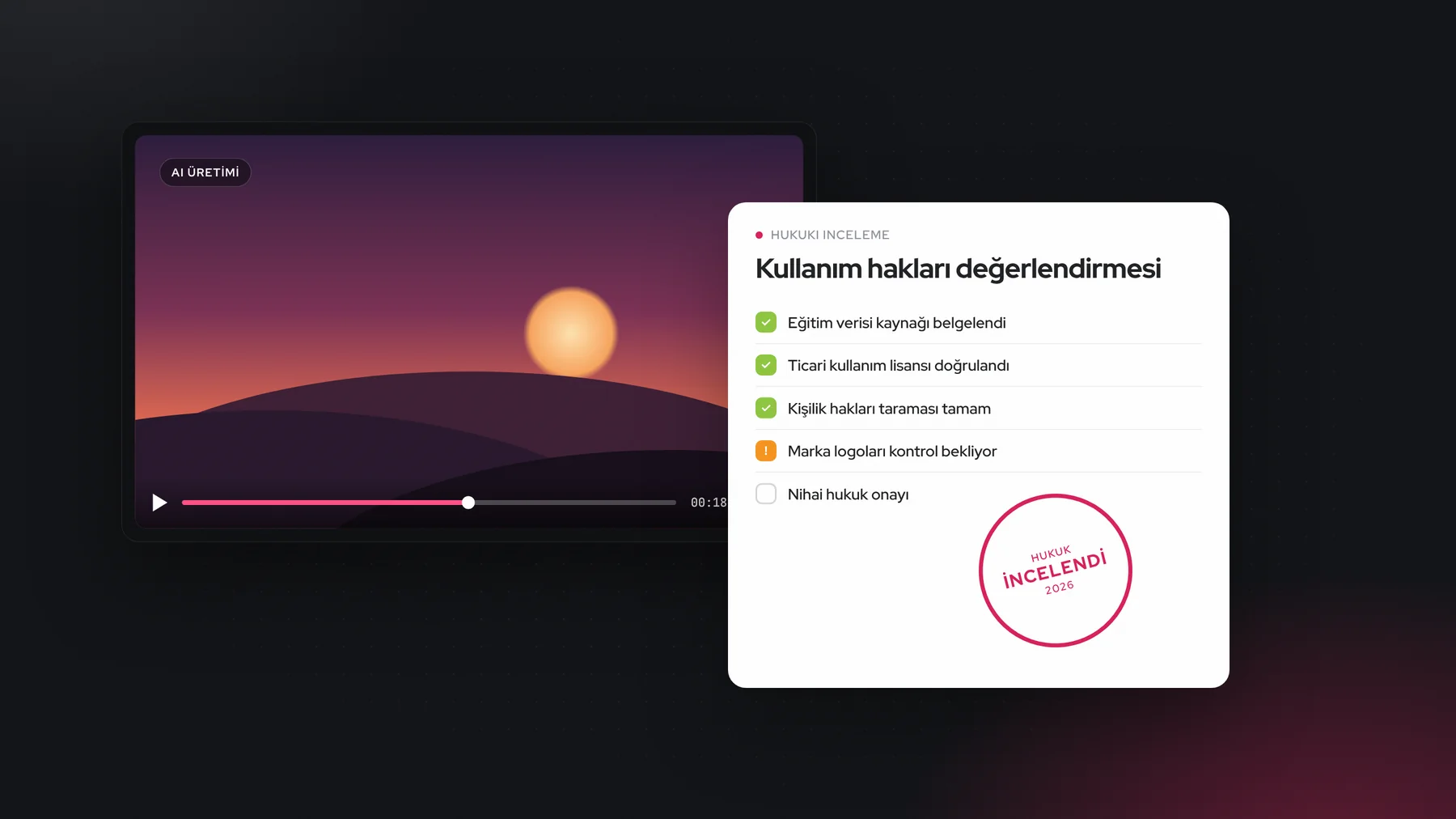
Creating video with generative AI tools gives marketing departments speed and cost advantages, but it also brings new legal responsibilities that don't exist in traditional production. The most common misconception is that paying a subscription to an AI platform automatically grants all commercial rights to the resulting video. In reality, the nature of the training data, the model's terms of use and the potential for the content to infringe third-party rights all require careful review.
Key Legal Uncertainties in AI Video Production
The legal ground for synthetic media rests on three pillars: the dataset the model was trained on, how original the output it produces is, and how that output is published commercially. Many popular video generation platforms treat ownership of your inputs (prompts and source images) and of the outputs under separate contract clauses.
Especially in national or global campaigns run by corporate brands, an AI-generated frame that unknowingly imitates a copyrighted design, a protected architectural work or a visual style that isn't in the public domain directly threatens the brand's reputation and budget.
Copyright Protection and Ownership of Outputs
Current copyright doctrine (most notably the Turkish Law on Intellectual and Artistic Works and the international Berne Convention) requires a work to be the product of human intellect and creativity to qualify for protection. Whether video scenes generated entirely by an algorithm from a text prompt can be registered as independent works is legally contested.
This can make it harder to claim infringement if a competitor copies your video. To strengthen your legal protection, it is vital to document human input: scriptwriting, colour grading, post-production editing and hybrid techniques.
4 Critical Risks Brands May Face
| Risk Area | Legal Basis | Possible Outcome | Preventive Measure |
|---|---|---|---|
| Training Data Infringement | FSEK Art. 21-25 (Copyright) | Damages claims and takedowns | Choosing enterprise models that offer copyright indemnity |
| Personality Rights Violation | Turkish Civil Code Art. 24, KVKK Art. 5 | Material and moral damages, reputational harm | Never using a real person's face or voice likeness without explicit consent |
| Trademark / Design Infringement | SMK Art. 7 and 29 (Industrial Property) | Unfair competition and product recalls | Screening generated visuals for logos, emblems and iconic designs |
| Misleading Advertising | Consumer Protection Law and Advertising Board Principles | Administrative fines and ad suspension | Transparently labelling the video as synthetic / AI-generated |
A Step-by-Step Legal Review and Approval Process
The checklist marketing teams should complete before going live should include these steps:
- 1. Check the licence scope: Confirm that the AI video tool is on an enterprise licence that includes commercial use rights, not a free or individual plan.
- 2. Audit your prompts: Make sure prompts contain no names of living artists, registered brand names or references to copyrighted characters.
- 3. Screen visual elements: Check building silhouettes, artworks, vehicle designs and clothing details in the background for protected elements.
- 4. Archive and document: Keep a record of the prompt history, the version of the platform terms and any human post-production work.
Clauses Your Agency and Platform Contracts Should Include
If video production is handled by an external agency or production house, the service agreement should include AI-specific clauses. The agency should disclose which tools it uses, commit to indemnify the brand in case of copyright infringement (an indemnification clause) and accept liability for third-party claims arising from training data.
On the platform side, read carefully which conditions the copyright indemnity offered by enterprise providers depends on (for example, not requesting a known brand in the prompt).
Conclusion and an Action Plan for Brands
AI video production is an indispensable innovation for marketing teams, but moving ahead without a legal framework can leave your brand exposed to unpredictable damages and reputational risk. The safest approach is to support creative work with enterprise contracts, clear prompt rules and multi-stage quality control workflows.
To achieve both aesthetic excellence and corporate safety in your digital campaigns, you can get in touch with the Elites team and learn about our strategy-led design process on our About page.
Frequently Asked Questions
Let's Grow Your Strategy Together
Plan AI, digital design and performance-driven growth solutions for your brand with our expert team.
Get a Quote