


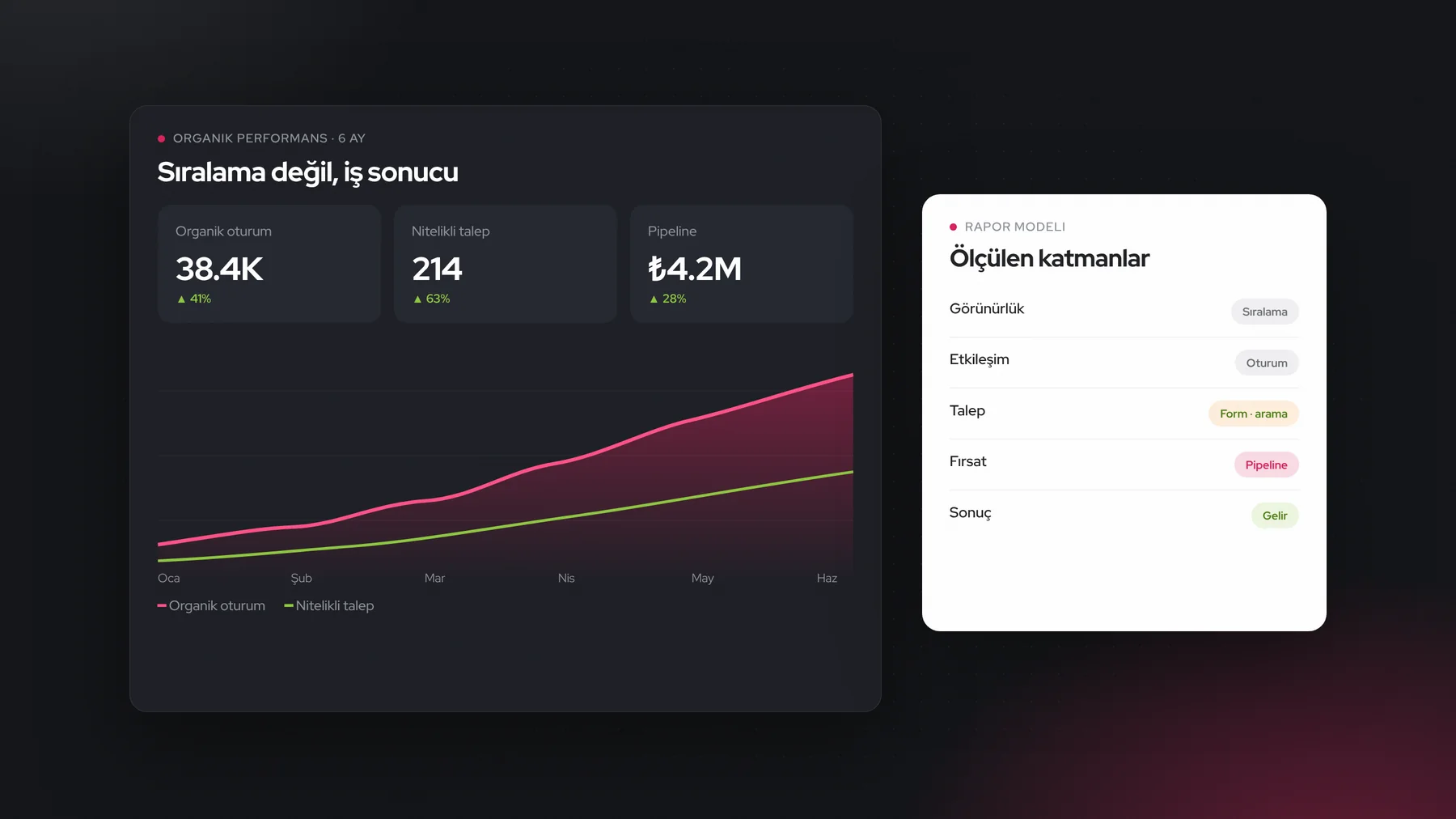
Agency reports saying 'We got 15 keywords onto page one this month' or 'Organic clicks are up 40 percent' mean nothing to a board. For a CEO or CFO there is only one question: 'How many of these organic visitors became customers, and how much revenue did they bring in?'
Why Keyword Rankings Aren't a Business Result
Ranking metrics are easy to manipulate and don't correlate directly with revenue. Ranking first for a term searched millions of times, like 'motivational business quotes', can bring huge traffic, but none of those visitors will buy your industrial solution. In corporate SEO, traffic isn't the goal; it's a means of feeding qualified demand.
The Corporate SEO Success Pyramid: 4 Levels of Measurement
To align SEO progress with the business, track metrics at four levels:
- Level 1 (Technical health): Crawlability, Core Web Vitals, indexation rate.
- Level 2 (Market visibility): Impressions and organic clicks on non-branded commercial keywords.
- Level 3 (Qualified demand – MQL): Corporate quote requests from solution and service pages.
- Level 4 (Revenue and ROI): Net revenue that started in the organic channel and turned into contracts.
An SEO KPI Table for the Board
| Metric | Measurement Tool | Business Meaning | Target Direction |
|---|---|---|---|
| Non-Branded Commercial Clicks | Search Console | New prospects who don't know you yet | Steady growth |
| Service Page Form Rate | GA4 (Event) | Traffic quality and page persuasiveness | 2–5 percent range |
| Organic MQL Volume | CRM / GA4 | Valid opportunities handed to sales | Quarterly growth |
| Organic Pipeline Value | CRM (HubSpot/Salesforce) | Potential revenue generated by organic leads | 5x–10x the investment |
Tracking with Google Analytics 4 and CRM Integration
To track the full funnel, every form submission on the website should write the user's source (First User Source / Medium = Organic) to the contact record in your CRM. When a deal closes in the CRM, you should be able to report that the sale came from SEO and calculate the net return (ROI) on your SEO investment.
Turning Data into Action: A Monthly Reporting Routine
The key question to review every month: 'How many organic leads did sales reject last month, and why?' If forms are coming from the wrong industry, recalibrate the search intent of your content and tighten your negative filtering.
Conclusion: Growth-Focused SEO
Corporate SEO isn't an IT or technical optimisation task; it's a strategic sales channel that brings in revenue directly. To grow your website's organic performance with real business data, take a look at our case studies and talk to Elites.
Frequently Asked Questions
Let's Grow Your Strategy Together
Plan AI, digital design and performance-driven growth solutions for your brand with our expert team.
Get a Quote